Buying property in Abu Dhabi: a 2026 investor guide
Where the capital actually rewards you, island by island, with current yields, the freehold rules that decide what you can own, and the Golden Visa threshold that trips most first-time buyers up.
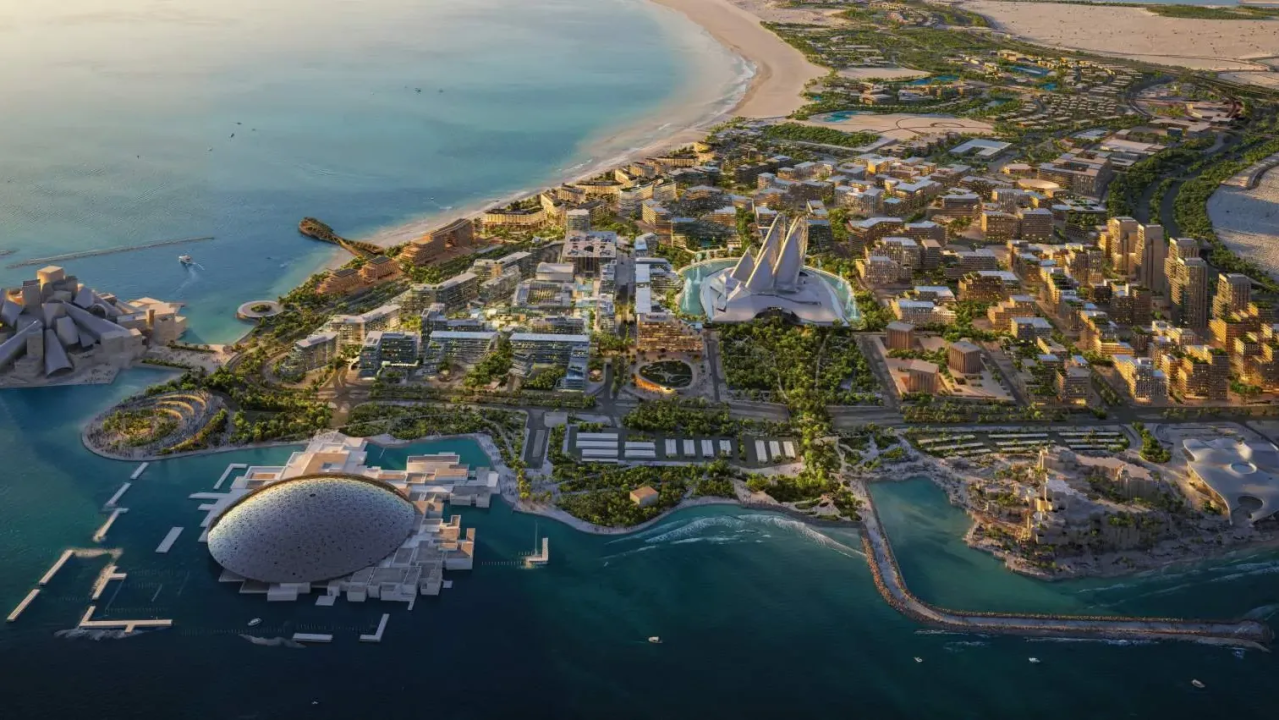
Abu Dhabi's investment zones, where foreign buyers can own freehold property in 2026.
Yes, foreigners can buy property in Abu Dhabi, but only freehold in designated investment zones, and the Golden Visa rule here is stricter than Dubai's. That is the short answer most people are looking for. The longer answer, which is where the money is actually made, is knowing which of the capital's areas fits your goal: rental income now, capital growth over five years, or an early entry into something that is not liquid yet.
This guide is built for the investor deciding whether Abu Dhabi belongs in the portfolio, and if so, where. It covers the legal framework for foreign buyers, the current numbers from Q1 2026, and a direct read on the three islands every serious buyer is comparing right now: Yas, Saadiyat, and Hudayriyat. My job here is not to sell you Abu Dhabi. It is to give you the framework to decide whether it fits, and to tell you plainly when an area does not suit your plan.
- Why Abu Dhabi, why now
- Can foreigners buy property in Abu Dhabi
- Freehold zones and what you can own
- The numbers: yields and prices
- Yas Island: yield and liquidity
- Saadiyat Island: capital growth
- Hudayriyat Island: the long play
- Golden Visa through property
- Abu Dhabi vs Dubai
- Who this market fits
- Risks and what to check
- Zeyad's take
Why Abu Dhabi, why now
For years Abu Dhabi sat in Dubai's shadow in the property conversation. That has changed, and the data is the reason. The emirate recorded roughly AED 66 billion in real estate transactions in Q1 2026 alone, and 2026 full-year activity is tracking well above the prior year. Sixteen new off-plan projects were registered in Q1 2026, a 60% jump on the same quarter last year. This is not a market running on hype. It is being pushed by population growth, non-oil GDP growth, and a genuine supply-demand gap.
The headline that surprises people: Hudayriyat Island, not Saadiyat or Yas, topped Q1 2026 transaction value at close to AED 12 billion. Reem Island followed, then Saadiyat, then Yas. That tells you where the capital is moving, but volume is not the same as the right buy for you, which is the point this whole guide keeps returning to.
Can foreigners buy property in Abu Dhabi
Foreigners can buy property in Abu Dhabi, but the rule that matters is location. Non-UAE nationals can own freehold property only inside designated investment zones. Outside those zones, roughly 40% of the emirate's residential areas remain off-limits to foreign freehold ownership. This is the single most common point of confusion. Buyers assume Abu Dhabi works like Dubai, where freehold zones are widespread. In the capital, the eligible areas are more concentrated, so checking investment-zone status before you fall in love with a unit is not optional.
You do not need to be a UAE resident to buy. A foreign buyer abroad can purchase, though you may hit practical friction with identity systems like UAE PASS during registration. For a deeper walkthrough of eligibility, residency status, and the documents involved, read the dedicated guide on buying property in Abu Dhabi as a foreigner.
Freehold zones and what you can own
Abu Dhabi has nine designated freehold investment zones where foreign nationals can own property outright: Yas Island, Saadiyat Island, Al Reem Island, Al Raha Beach, Masdar City, Khalifa City, Al Reef, Al Shamkha, and Al Falah. Freehold gives you full ownership of both the unit and the land it sits on, with no time limit. Leasehold, by contrast, gives use rights for a fixed term, typically up to 99 years, and does not carry the same long-term ownership strength.
The distinction is not academic. Only full freehold title qualifies for the Golden Visa, so if residency is part of your plan, a leasehold interest will not get you there regardless of value. When you compare a unit, confirm the zone, confirm freehold versus leasehold, and confirm the developer is registered with the Abu Dhabi land authority. If you are weighing the capital against Dubai's far larger freehold map, the Abu Dhabi vs Dubai property investment comparison lays out the trade-offs side by side.
The numbers: yields and prices in 2026
Across Abu Dhabi, gross rental yields generally sit between 5% and 8%, which is competitive against most global markets. The spread is wide, and it moves against the prestige of the area. The higher-yield communities, places like Al Reef, Khalifa City, and Masdar City, can deliver 7% and above because purchase prices stay grounded relative to rents. The prestige waterfront, Saadiyat and parts of Yas, compresses below 5.5% on some unit types because buyers pay a premium for the address.
Prime Abu Dhabi property also runs roughly 30% below the equivalent Dubai asset, which is a large part of the value argument. There is no annual property tax. Apartment owners pay service charges, commonly in the range of AED 10 to 25 per square foot per year, and that figure matters more in larger units than buyers expect. The table below is the working comparison I use with clients deciding between the three islands.
| Island | Typical gross yield | Apartment entry | Best for |
|---|---|---|---|
| Yas Island | 6% to 8% | From ~AED 700k | Rental income, lifestyle, off-plan growth |
| Saadiyat Island | 5% to 6% | Premium tier | Long-term capital appreciation |
| Hudayriyat Island | Emerging | Off-plan led | Long-hold, early-entry investors |
Yas Island: where yield and liquidity meet
Yas Island is the area I point most income-focused buyers toward first. It is the sweet spot between rental yield and lifestyle demand. The entertainment and hospitality engine, the theme parks, the circuit, the constant tourist footfall, keeps occupancy high and supports both short-term and family rental demand. Gross yields on Yas commonly land in the 6% to 8% band, and apartment entry pricing can start from around AED 700,000, which keeps the cash-flow math workable.
For an investor who needs the asset to be liquid, who wants to rent it quickly and exit without waiting months, Yas has the active resale and rental base to support that. This is the practical advantage over newer areas. Full project-level detail sits in the Yas Island review.
Saadiyat Island: the capital growth play
Saadiyat is a different instrument. This is the capital's most prestigious address, anchored by the Louvre Abu Dhabi, the upcoming Guggenheim, and NYU Abu Dhabi. That cultural scarcity draws high-net-worth expatriates and stable luxury demand, which is why Saadiyat is associated with long-term capital appreciation rather than headline yield.
Be honest with yourself about which you are buying for. On some Saadiyat unit types, particularly larger apartments, the net rental-income math is genuinely weak, because purchase prices have outrun rents. If your plan is cash flow, this is not your island. If your plan is to hold a scarce, appreciating asset in a globally recognised location for five years or more, Saadiyat earns its place. The full breakdown is in the Saadiyat Island review.
Hudayriyat Island: the long play, with eyes open
Hudayriyat is the area generating the most excitement and the most confusion. It topped Q1 2026 transaction value, the master plans are genuinely impressive, and the lifestyle vision is ambitious. All true. But strong launch-phase sales activity is not the same as a deep, proven resale and rental market. For now, Hudayriyat does not have the active liquidity and rentability that Yas and Saadiyat carry today.
So I frame it plainly. If you are an early-entry investor with a genuinely long horizon and you do not need to exit or generate income in the short to medium term, Hudayriyat can fit. If you need liquidity or near-term cash flow, look at Yas or an established community first and revisit Hudayriyat once the area matures. The Hudayriyat Island review goes deeper on the timeline.
The Golden Visa through property, and the Abu Dhabi catch
Buying property at the right level can qualify you for the 10-year UAE Golden Visa, and this is where Abu Dhabi differs from Dubai in a way that catches buyers out. The threshold is AED 2 million, but Abu Dhabi requires that your personal equity in the property independently reaches AED 2 million, outside any mortgage balance. So a AED 5 million property with a AED 3 million mortgage leaves AED 2 million in equity, which qualifies. Dubai, since early 2026, only requires the total title-deed value to reach AED 2 million regardless of the mortgage. The capital's rule is stricter.
Off-plan in Abu Dhabi can qualify if AED 2 million or more has been paid to the developer, and multiple properties can be combined to reach the threshold. The property must be freehold in an eligible zone. For the full eligibility path, equity math, and application route, read the Abu Dhabi Golden Visa guide.
Abu Dhabi vs Dubai: which fits you
This is the question almost every cross-market investor asks. The honest framing is that they are different products, not better and worse. Abu Dhabi posted Q1 2026 price growth around 8% year-on-year against Dubai's roughly 12.5%. The capital is steadier, less volatile, and priced lower for an equivalent asset. Dubai is faster moving, deeper, and more liquid, with a far larger freehold map.
If you want volatility and depth, Dubai. If you want a steadier, lower-entry hold with strong fundamentals and less noise, Abu Dhabi has a real case. Many of my clients hold both for exactly that reason. The full side-by-side, including yields and liquidity, is in the Abu Dhabi vs Dubai property investment guide. If you are still building the Dubai side of your portfolio, the buying property in Dubai guide is the companion to this one.
Who this market fits
Abu Dhabi is not one decision. It is several, depending on who you are.
- The yield investor: Yas Island apartments, or higher-yield communities like Al Reef and Masdar City. You want occupancy and cash flow, and the capital delivers it outside the prestige tier.
- The capital-growth buyer: Saadiyat Island. You are buying scarcity and a global address for a five-year-plus hold, and you accept softer near-term yield in exchange.
- The early-entry, long-horizon investor: Hudayriyat Island, eyes open on liquidity. You are positioning ahead of the curve and you do not need to exit soon.
- The residency-driven buyer: any eligible freehold zone where your equity independently clears AED 2 million. Structure the purchase around the equity rule, not just the price.
- The cross-market investor: hold Abu Dhabi for steadiness alongside a Dubai position for depth and liquidity.
Risks and what to check before you sign
Abu Dhabi is a strong market, which is exactly when buyers get careless. The risks are manageable if you check for them.
- Zone eligibility: confirm the unit sits in a freehold investment zone before anything else. A great unit in the wrong zone is not ownable by a foreign buyer.
- Liquidity mismatch: emerging areas like Hudayriyat carry thinner resale and rental markets today. If you may need to exit early, that is a real cost.
- Yield versus prestige: the most prestigious addresses often carry the weakest rental-income math. Decide which you are buying for before you commit.
- Service charges: at AED 10 to 25 per square foot per year, charges compound in large units and eat into net yield. Model them in.
- Golden Visa equity rule: in Abu Dhabi your equity must independently reach AED 2 million. Buying close to the line with a large mortgage can leave you short at renewal.
Zeyad's take
The mistake I watch buyers make in Abu Dhabi is chasing the transaction headline. Hudayriyat topped Q1 volume, so it must be the buy. That is backwards. Volume tells you where the crowd went, not where you should go.
Here is what you cannot predict: how fast an emerging area matures into a liquid market, when the next price leg moves, or how sentiment shifts quarter to quarter. Here is what you can control: your holding period, your cash flow, whether the zone is freehold, and whether the island actually matches the income or growth you need. My advice is to start from your plan and let it pick the island, not the other way round. Yas for income and liquidity. Saadiyat for scarcity and growth. Hudayriyat only if you can wait. If none of those is your situation, that is fine, and I will say so on a call rather than push you into a unit.
- Yas Island review: the yield and liquidity pick
- Saadiyat Island review: the capital growth play
- Hudayriyat Island review: the long-hold early entry
- Off-plan property in Abu Dhabi: how new launches work in the capital
- Abu Dhabi Golden Visa: the AED 2M equity rule explained
- Buying in Abu Dhabi as a foreigner: eligibility and process
- All off-plan project reviews: the master pillar
- Buying property in Dubai: the companion guide